
Building Services in Suffolk
Most of the building work I'm asked about in Suffolk isn't a full extension — it's the awkward middle ground. A new garden wall. A blocked-up doorway. A small structural repair that no one local seems to want to take on for the size of it.
The middle ground of building work
There's a real gap in Suffolk for tradespeople willing to take on the smaller building jobs — the projects too big for a one-day handyman visit and too small for a builder with a full crew and a year-long order book. Knocking through a small section of wall to combine a kitchen and dining room. Building a garden wall. Repairing a buckled bay window header. Replacing rotten window cills. Repointing a chimney that's let in damp. Fitting a new lintel above a doorway. Repairing a bowed garden retaining wall. These are the projects I take on regularly, on my own or with a single trusted bricklayer or plasterer where extra hands are needed.
The honest scope: I work happily on jobs from a single day up to about three weeks of continuous building. Beyond that, you really do want a proper main contractor managing the full project, and I'll happily recommend one I trust.
Brickwork, blockwork and pointing
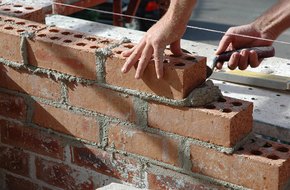
Brick and block work covers a lot of ground in Suffolk: rebuilding small sections of garden wall blown over by winter storms, building new garden walls from scratch (single-skin retaining walls up to about a metre, double-skin freestanding walls higher than that), building new dwarf walls for fence panels, blocking up unused doorways or windows, and repointing weathered brickwork.
Repointing in particular is a job worth doing well. Suffolk has a lot of soft Victorian brickwork built originally with lime mortar, and using modern hard cement-based mortars on it actually causes long-term damage by trapping moisture in the bricks. For pre-1920s properties I use lime mortar (NHL or hot-lime depending on the situation) and the right joint profile (usually flush or slightly recessed) to match the original character.
Plastering, rendering and making good
I take on smaller plastering jobs — patching, making good around new electrical chases or replaced lintels, skim-coats over previously artexed ceilings (after fibre testing), and dry-lining new stud walls. For full re-plastering of large rooms or whole houses I bring in a specialist plasterer who's faster than me and gets a better mirror finish on a big skim coat. The honest answer is that plastering is a skill that takes thousands of hours to master and I'd rather pay for the right finish than fake it.
External rendering — small repair patches, fixing failed bonded render, repointing of pebbledash — I'll take on directly. Full re-rendering of an elevation or a whole property goes through a proper rendering specialist.
Lintels, headers and small structural repairs
Where there's a structural element (a load-bearing wall, an opening that needs a new lintel, a sagging floor that suggests a joist failure), I'll only proceed once a structural engineer has confirmed the loading and the right size of beam. The engineer's fee is usually £200-£400 for a single inspection and design and is genuinely worth every penny — you get a stamped calculation that satisfies building control and confirms the work won't drop the upstairs floor into the kitchen.
Common small structural jobs: replacing failed cavity wall ties (clearly visible as horizontal cracks every six brick courses), fitting new lintels above doorways and windows where the existing one has rusted and split (very common in 1960s/70s mild steel lintels), repairing buckled bay window headers, and underpinning small sections of failed footing on outbuildings. Anything bigger than this scope goes to a builder with full structural insurance.
Honest about scope, careful about details
The same principle applies as elsewhere: I'd rather quote you honestly for what's in my comfort zone, and recommend the right person for what isn't, than take the work and learn on your house. Building work is unforgiving and the consequences of getting it wrong are big. The trade-off is that you get a tradesman who will tell you when something's outside scope rather than swallow it and produce something dodgy.
Frequently asked questions
Do you do extensions?
I'll take on small single-room extensions of around 15-20 square metres alongside trusted Suffolk subcontractors. Larger extensions are best handled by a builder with a full crew.
Will you knock through a wall to combine two rooms?
Yes — once a structural engineer has confirmed the wall is non-loadbearing or designed the appropriate steelwork, I'll do the opening work, fit the beam if required, and make good both sides.
Do you handle building control sign-off?
For notifiable work I'll arrange the building control inspections at the right stages. The engineer's calculations and my work invoices form the documentation pack you keep for any future house sale.
Can you repoint old Suffolk brickwork?
Yes — with the right mortar mix for the period of the property. Pre-1920s brickwork should generally be repointed in lime mortar, not cement, to avoid trapping damp in the bricks.
Do you do garden walls and retaining walls?
Yes, this is a regular booking. Single-skin walls up to about a metre, double-skin walls or proper engineered retaining walls above that with the appropriate footing depth and reinforcement.
Other services I offer across Suffolk
Towns I cover for building
I work across the whole of Suffolk. A handful of the towns I regularly visit:
Ready to book building in Suffolk?
Drop me a line with a few photos and a description of the job. I'll come back to you the same day with an honest opinion and a no-obligation quote.